
How to prevent frozen pipes in Fairfax during winter cold snaps
Fairfax cold snaps hit single digits fast. Here is how to keep pipes from freezing, what to do when they do, and when to call a restoration crew.
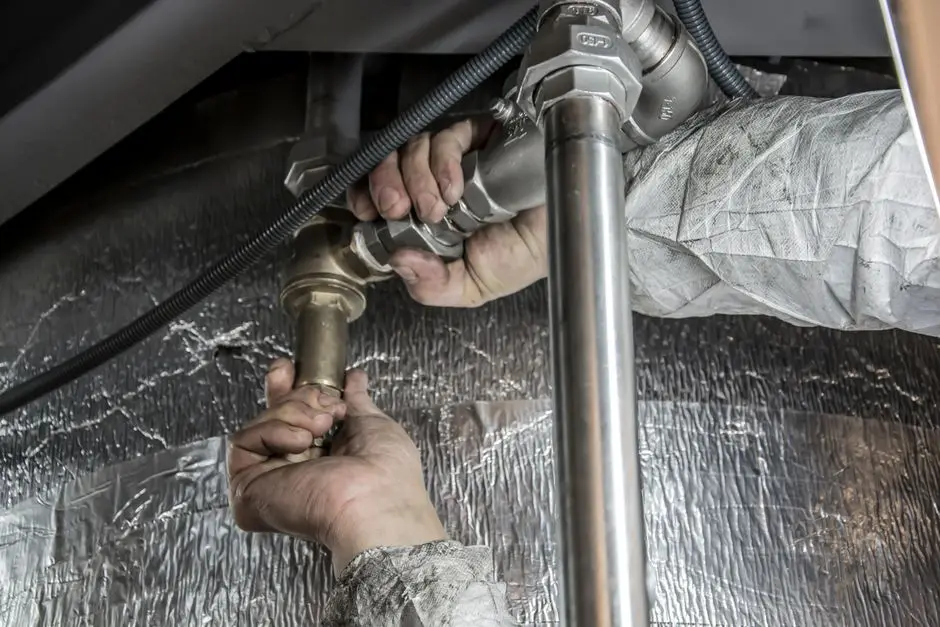
You prevent frozen pipes in Fairfax during a winter cold snap by keeping every pipe above 32°F: seal the crawlspace and garage, insulate exposed runs, keep the thermostat at 55°F or higher, and open cabinet doors on exterior walls. When the forecast drops below 20°F, drip the farthest faucet at a pencil-lead trickle and shut off the outdoor spigots. That is the whole answer. What follows is how we actually do it on Fairfax homes, which pipes fail first, and what to do when one bursts anyway.
Fairfax sits in a pocket of Northern Virginia where cold snaps arrive fast - a 60°F afternoon can be 12°F by midnight, and the ground around a slab foundation chills faster than most homeowners expect. We run water damage restoration Fairfax VA calls all winter, and the pattern is always the same: the burst happens on the second or third night of a cold snap, not the first.
Why Fairfax pipes freeze so fast during a cold snap
Fairfax pipes freeze fast because most of the housing stock here was built between 1960 and 2000, when supply lines were run through exterior walls, unheated garages, and vented crawlspaces that were never designed for single-digit nights. A pipe does not need to be outside to freeze. It needs to be in a space that drops below 20°F for six or more hours, and Fairfax has plenty of those.
The three failure points we see most often:
- Hose bibs and the first 12 inches of pipe behind them. The exterior faucet freezes, the ice creeps inward, and the pipe splits inside the wall cavity.
- Pipes in the garage ceiling or against an exterior wall. A closed garage door still leaks cold air; a garage that sits at 25°F will freeze the line above it.
- Crawlspace supply lines under kitchens and bathrooms. Vented crawlspaces in older Fairfax neighborhoods routinely hit 15°F when the outside air is 5°F.
Homes in Old Town Fairfax water damage restoration Fairfax VA territory are especially exposed - the older detached houses there often have uninsulated rim joists and original copper that has already been stressed by decades of freeze-thaw cycles.
At what temperature do pipes freeze in Fairfax, Virginia?
Pipes in Fairfax, Virginia begin to freeze when the air around them stays at 20°F or below for about six hours, and the risk becomes serious at 10°F. Water freezes at 32°F, but the pipe wall and the air gap around it insulate the water inside, so the actual freeze lags the outdoor temperature by several hours.
Two numbers matter more than the thermometer reading:
- Duration. A four-hour dip to 15°F is far less dangerous than a twelve-hour stretch at 22°F. Ice forms and expands over time.
- Wind. A 20 mph wind pulls heat out of an exterior wall roughly twice as fast as still air. That is why the burst usually happens on the windy night, not the coldest one.
In a typical Fairfax winter we see the first hard freeze in late December and the last one in early March, with the worst cold snaps landing in the second half of January. The 2026 season has already produced two nights below 15°F in the area, and each one generated a wave of burst pipe repair Fairfax VA calls the following morning.
The 8-step cold snap checklist for Fairfax homes
This is the checklist we walk homeowners through before a forecast cold snap, in the order that matters most. You can complete most of it in under an hour.
- Disconnect every garden hose and shut off the outdoor valves. A hose left connected traps water in the bib and splits it. If your house has an interior shutoff for the hose bibs, close it and drain the line.
- Set the thermostat to 55°F minimum - 65°F if you will be away. Do not set it back overnight during a cold snap. The few dollars you save on gas are nothing next to a $4,000 to $9,000 repair.
- Open cabinet doors under sinks on exterior walls. Kitchen and bathroom cabinets on north and west walls trap cold air. Leaving the doors open lets room heat reach the pipes.
- Seal the crawlspace vents and any obvious drafts. A piece of rigid foam over the vent and a bead of caulk around the rim joist can raise the crawlspace temperature 8°F to 12°F.
- Insulate the exposed runs. Foam pipe sleeves on the first three feet behind each hose bib and on any line in the garage ceiling are the highest-value fix you can make.
- Drip the farthest faucet. A pencil-lead trickle on the fixture furthest from the water main keeps water moving through the whole system.
- Keep the garage door closed and the heat on. If your garage shares a wall with a kitchen or bathroom, treat it as interior space during a cold snap.
- Know where your main shutoff is. If a pipe bursts, closing the main in the first 60 seconds is the difference between a wet floor and a flooded basement.
Homeowners in Fair Lakes water damage restoration Fairfax VA and similar townhome clusters have one extra step: tell the neighbor if you are traveling. A shared wall means their heat loss becomes your freeze risk.
Pipe insulation tips for Fairfax, Virginia homes
The best pipe insulation for Fairfax winters is closed-cell foam sleeving with an R-value of at least R-3, fitted tight to the pipe and sealed at every joint with foil tape. Fiberglass wrap works in heated spaces but fails in crawlspaces and garages where it can absorb moisture and lose most of its insulating value.
What we install and why:
- Closed-cell foam sleeves (R-3 to R-4). Cheap, easy to cut, and unaffected by damp. Use the self-sealing version with adhesive strips.
- Heat tape on the worst runs. A self-regulating heat cable on the pipe behind an exterior wall or in a crawlspace is the only thing that works when the space itself cannot be warmed. Plug it into a GFCI outlet and check it each November.
- Fiberglass batts for the rim joist, not the pipe. Insulate the building envelope, not the pipe, wherever you can. Keeping the space warm beats wrapping the line.
For a typical Fairfax single-family home, insulating every exposed run costs $150 to $400 in materials and takes a Saturday. That is the cheapest residential water damage restoration Fairfax VA insurance you will ever buy. If you are already dealing with a wet crawlspace or a damp basement, fix that first - wet insulation is worse than none.
Should you drip faucets to prevent frozen pipes in Fairfax?
Yes - drip faucets whenever the forecast in Fairfax drops below 20°F, and drip the fixture furthest from the main. A trickle the width of a pencil lead relieves pressure inside the pipe, which is what actually causes the split. The pipe rarely bursts where the ice forms; it bursts downstream, where trapped water has nowhere to go.
Two rules make dripping work:
- Drip both hot and cold on a single-handle faucet set to warm, so both supply lines stay moving.
- Do not stop dripping until the daytime high is back above freezing. A pipe that thaws and refreezes is more likely to split than one that never froze.
If you are on a well, dripping is still fine - the pump cycles more, but a pressure tank handles it. If you are leaving town, shut the main off and drain the lines instead of dripping. A dripping faucet only protects a house someone is in.
What to watch out for: common mistakes
The most common frozen-pipe mistake in Fairfax is turning the heat down to save money during a cold snap. The second is using a propane torch or open flame to thaw a frozen line - that starts more house fires than it fixes pipes.
Watch for these:
- Thawing with a torch or heat gun on high. Use a hair dryer on low, a heat lamp, or warm towels. Never leave a flame unattended near a wall cavity.
- Insulating a pipe that is already frozen. Thaw first, then insulate. Wrapping ice just keeps it ice.
- Ignoring a faucet that sputters. A sputter or a weak stream on one fixture usually means ice is already forming upstream. Open the faucet fully and warm the pipe.
- Leaving the garage open "to let warmth in." It does the opposite. Close it.
- Skipping the crawlspace. Most of the burst lines we repair in Fairfax are in the crawlspace, not the wall.
If you do get water on the floor, shut the main off first, then call for structural drying Fairfax VA before mold has a chance to set in - that window is roughly 24 to 48 hours.
When to call a professional
Call a professional when a pipe has already burst, when water is pooling in a ceiling or crawlspace, or when you cannot find the freeze point after 30 minutes of careful thawing. Those are the three situations where waiting costs real money.
We handle the whole sequence: shut off the water, find and repair the split, extract standing water, and dry the structure with commercial dehumidifiers and air movers. A small wall-cavity leak caught the same day usually dries in two to three days. A leak that ran overnight into a basement often takes five to seven and may need flooded basement cleanup Fairfax VA before drying can start.
If the water came through a sewer line rather than a supply line, stop and call us before you touch anything - that is a different job with different safety rules.
Frequently Asked Questions
How do I prevent frozen pipes in my Fairfax VA home?
Keep the thermostat at 55°F or higher, seal crawlspace vents and garage drafts, insulate exposed pipe runs with closed-cell foam, disconnect hoses, and drip the farthest faucet when the forecast drops below 20°F. Most of the work takes an hour and costs under $400 in materials.
At what temperature do pipes freeze in Fairfax, Virginia?
Pipes in Fairfax start freezing when surrounding air stays at 20°F or below for about six hours. Water freezes at 32°F, but the pipe and wall insulate the water, so the real risk begins around 20°F and becomes serious at 10°F, especially with wind.
Should I drip faucets to prevent frozen pipes in Fairfax?
Yes. Drip the fixture furthest from the main at a pencil-lead trickle whenever the forecast is below 20°F, and keep dripping until daytime highs are back above freezing. A trickle relieves pressure inside the pipe, which is what prevents the split.
What is the best pipe insulation for Fairfax winters?
Closed-cell foam sleeving rated R-3 or higher, sealed at every joint with foil tape, is the best choice for Fairfax winters. Add self-regulating heat tape on pipes in crawlspaces or exterior walls that cannot be kept warm, and insulate the rim joist to keep the space itself above freezing.
How much does frozen pipe repair cost in Fairfax in 2026?
Typical 2026 pricing in this area runs $350 to $900 for a straightforward burst-pipe repair and $2,500 to $8,000 when water has reached drywall, flooring, or a basement. The difference is almost always how fast the water was shut off and dried.
Get help with water damage restoration Fairfax VA in Fairfax
If a pipe has already burst or you are staring at water where it should not be, call us now - we shut off the water, repair the line, and dry the structure before mold gets a foothold. We serve homeowners across Fairfax, from Downtown Fairfax water damage restoration Fairfax VA to the outer neighborhoods.
Call (725) 309-8505 for water damage restoration Fairfax VA in Fairfax.